
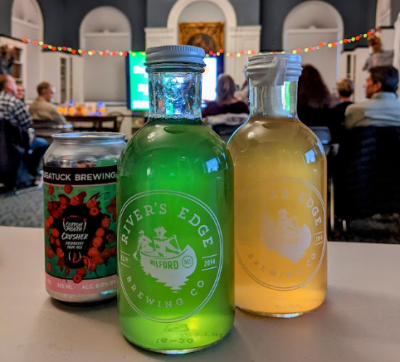
We enjoyed a mini-Halloween party at this month's Ale Together Now program, where we explored German Sours! The Berliner Weiße with green woodruff syrup, and the fruity Gose featuring fresh raspberries, made for the perfect witches' brews to pair with the festivities. We learned about what sour ales are and explored the history, brewing process, and culture of Berliner Weiße and Gose beers, two fantastic German sour ales.
In order to truly appreciate a sour beer, it's important to note that sour ales are not just a modern fad in the brewing world-- in fact, most of our oldest beers were likely at least a little sour. Yeast has always been a part of the beer-brewing process (though brewers did not understand this at first), but airborne microorganisms, like bacteria, also infected beer through their open vats, making for an unintentionally sour beer. The brewing process changed over time as brewers began to understand the chemistry of brewing, and non-sour beer styles developed with better sanitation and storing practices-- but sour beers never fully went away as a style. 2010-2023 was a particularly popular time for sour ales, as traditional sours were revitalized and new styles were being created with enormous creativity!
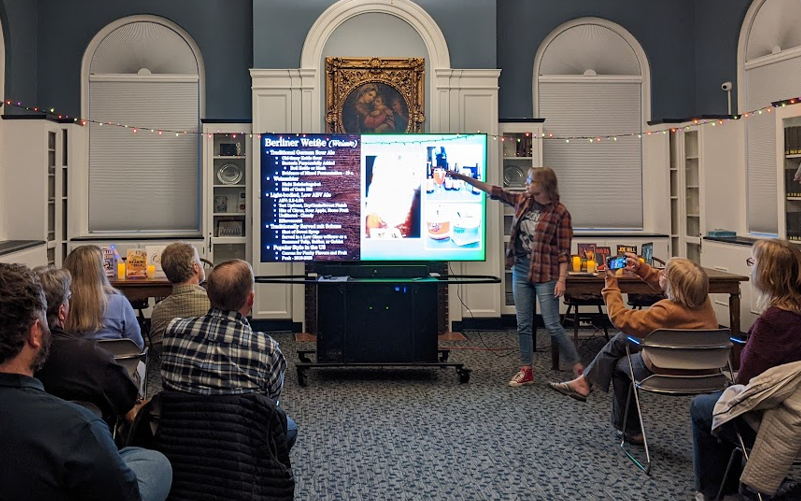
So what makes a beer sour? Sour flavors in beer come from our detection of lactic acid in the beer, which can be produced in two different ways: one way is through bacterial infection by Pediococcus or Lactobacillus bacteria, or the addition of Brettanomyces, a yeast strain that contains bacteria within its matrix. The other method of making a beer sour is through the addition of yeast strains that produce lactic acid along with carbon dioxide and alcohol, the most popular of which is Saccharomyces sourviseae.
There are many sour beer styles, but focusing on German sours takes us into the world of two particularly wonderful styles: Berliner Weiße and Gose. Berliner Weiße is a traditional German sour wheat ale, wherein bacteria is purposefully added to the boil kettle or the mash to produce a lightly tart flavor. It's a light-bodied, low-ABV ale that tends to be tart upfront, with a dry, grain-flavored, slightly sweet finish. There can also be hints of citrus, sour apple, and stone fruit in the flavor profile. It is traditionally served with a shot of sweet syrup, like woodruff or raspberry syrup, which is added to the glass before the beer is poured. The syrup adds wonderful flavor to the beer and balances the tart flavors with a little sweetness and herbal flavor. We sampled Jana, the Berliner Weiße from River's Edge Brewing Company, both plain and with green woodruff syrup added. We also sampled a sour ale with raspberries, called Cottonmouth Crusher, from Saugatuck Brewing Company-- this beer was a great example of a light, sour beer with raspberries!
The Gose is similar to the Berliner Weiße, in that it is a tart, light-bodied, sour, wheat-based ale: but it tends to be more mild in its sour profile, with some flavor influence from the Belgian Wit style. What makes the Gose unique is its saline quality, and many modern Gose recipes pair the salty flavor of this style with lime, cucumber, fruit puree, and/or lactose sugars. Gose beers feature a huge variety of flavors, including tart (from bacteria/adjuncts), salt (from the saline water), sweet (from the malt/adjuncts), spice (from the addition of coriander), bitter (from hops), and a little umami (from the yeast). A Gose is a truly unique and complex beer!
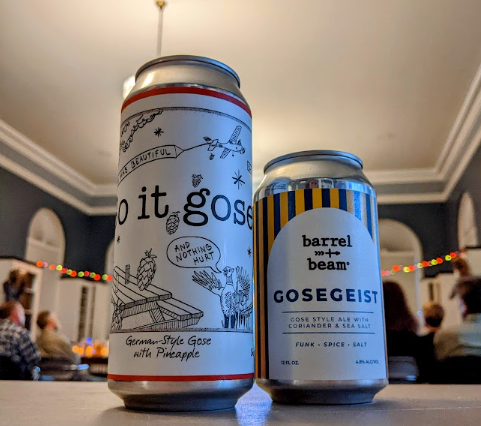
We sampled So It Gose from Brewery Faisan, and Gosegeist from Barrel and Beam, in collaboration with Archival Brewing Company. Both brews are a wonderful example of Gose styles!
Our understanding of Gose beers goes back to Goslar, Germany in the twelfth century. This beer was brewed with local water from the Gose river, which was naturally saline and provides the added flavor component of salt. In the eighteenth century in Leipzig, the style gained popularity, brewers began intentionally adding Lactobacillus bacteria and salt to the beer, providing tartness to the beer quickly without open-vat fermentation. With the world wars and the popularity of light lagers in the twentieth century, the Gose style fell out of existence for some time, until the sour beer craze of the twenty first century brought traditional styles back to life. Today, the Gose lives on as a unique beer style, with various adjuncts contributing different flavor profiles.
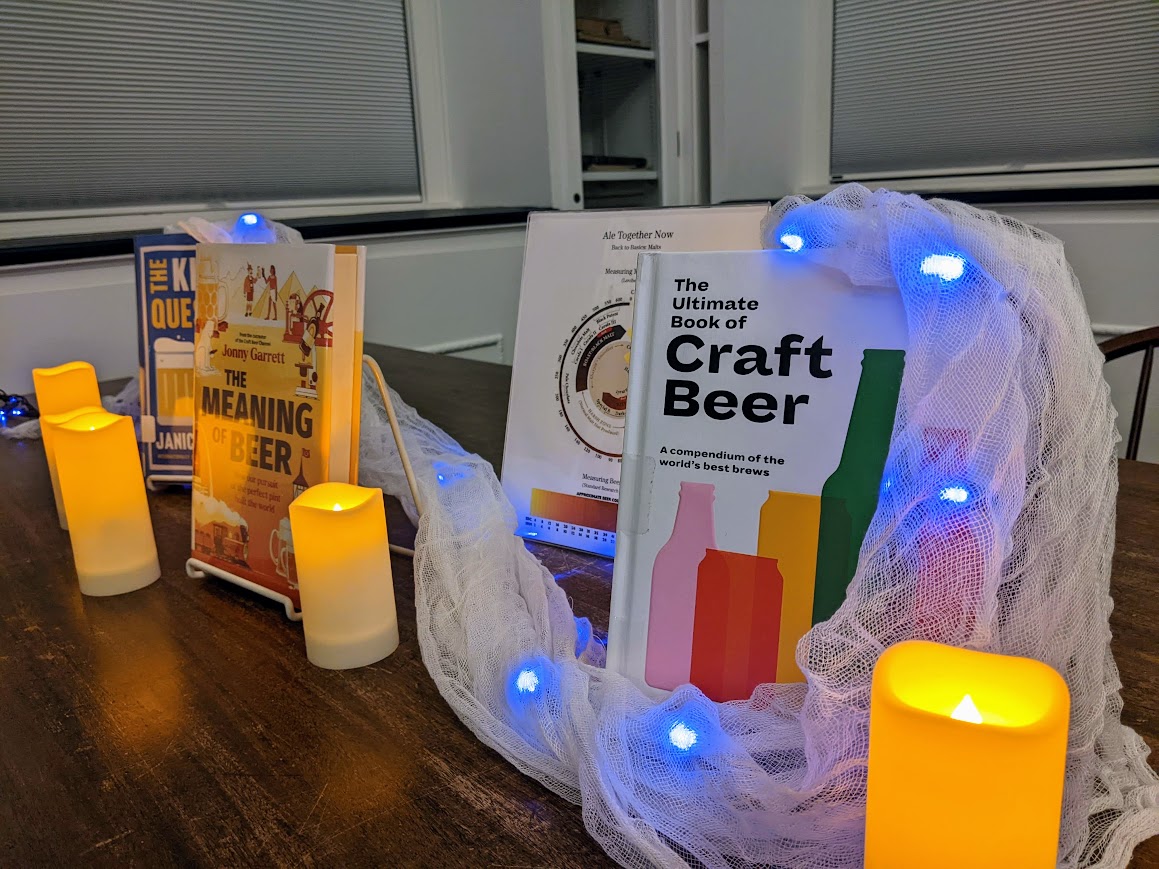
Thank you to everyone who joined us for this month's spooky Ale Together Now session. Registration for November's program is already open, so don't miss your chance to sign up on our online calendar! We can't wait to see you there.
Cheers!