
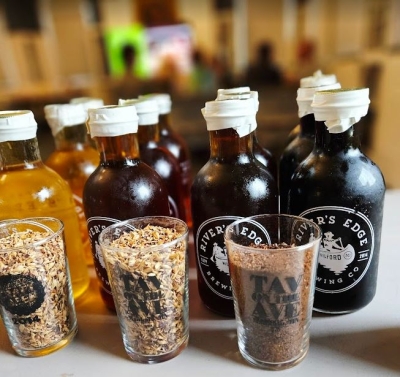
We went back to the basics for this month's Ale Together Now program, exploring the main component of the color, flavor, and aroma of beer-- malt! Termed "The Soul of Beer", malted barley is a cereal grain that comes from the seed of the Hordeum vulgare plant. Both two-row and six-row malt are used in brewing, providing fermentable sugars for the beer. Barley was first domesticated during the Neolithic period, in what is now parts of Egypt, Syria, and Iraq-- and it is a highly valued grain for brewing today! Barley retains its husk in the mash ton, allowing for easier filtration of the wort. It also contains higher levels of protein compared to other grains, contributing to better head retention.
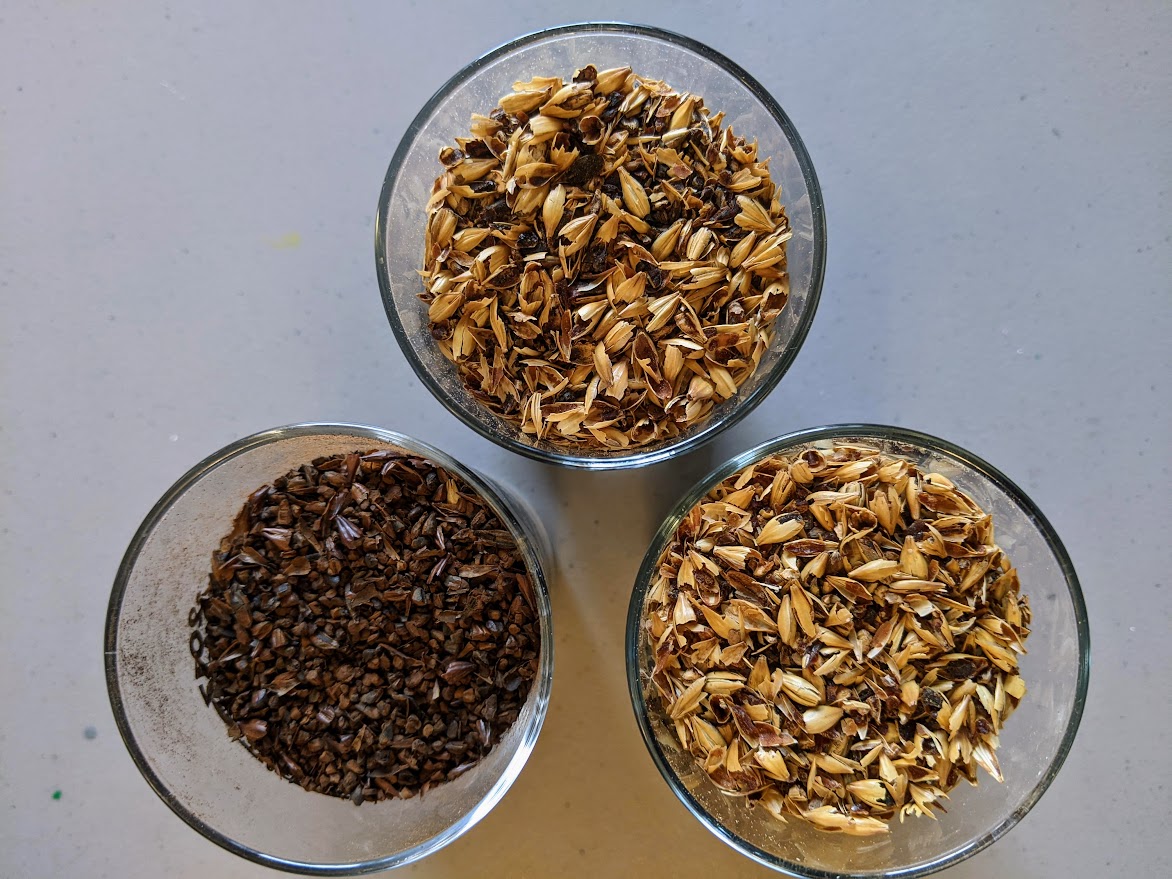
The type of malt, and the way it's used in brewing, determines the mouthfeel, color, and flavor profile of the beer. Brewers obtain different grain yields from two-row versus six-row malt, and malts grown in different geographical locations have some variation of carbs or grain size. Most importantly, the way that the malts are roasted determines the flavor of the beer.
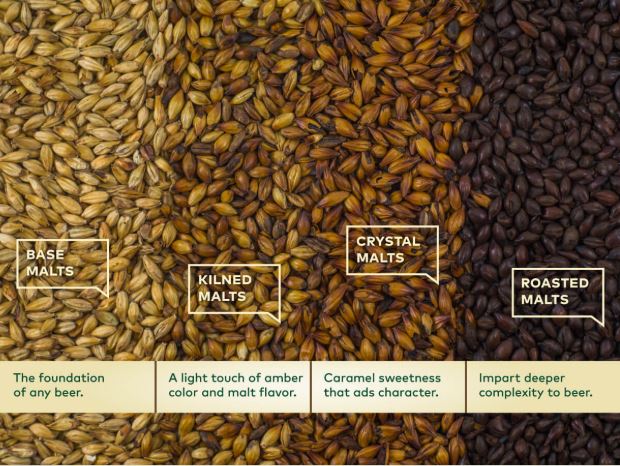
Malt colors are measured using the Standard Research Method (SRM), which utilizes a scale in numbers. The major types of malt include pale malts, caramel or crystal malts, and dark malts. As an example of a beer with a light, biscuit profile, we sampled Kolsch from River's Edge Brewing Company in Milford. This crisp, clean, refreshing beer is light and slightly sweet, balanced with German magnum hops, and sits at 5.3% alcohol by volume (ABV).
The malting process is what converts grains into liquid gold-- beer! Barley is initially very tough, and needs to germinate in order to soften. Grains are typically soaked in water for 2-3 days to allow the grain to germinate, to unlock enzymes, and to break down carbohydrates into fermentable sugars for the yeast. Creating wort, or mashing, is the first step in the brewing process, and takes place in a mash tun. The malt is steeped in hot water for 30-90 minutes, and stirred frequently. During this process, enzymes convert starches into sugars, to be consumed by yeast later on during fermentation. This "malt tea" created by soaking the malt in water is referred to as wort, and tends to be very sweet. The hops, added later in the process, will balance this out. We sampled some wort, and it was very grainy, slightly sweet, and hazy. Then, we sampled Pub Ale, an English-style Extra Special Bitter from River's Edge Brewing Company. Pub Ale has a toasty malt flavor and aroma, complemented by fine hop bitterness.
Malt does some heavy lifting in the brewing process, but did you know that a single grain bill can be used to brew multiple batches of beer? Parti-Gyle brewing, or poly-gyle brewing, refers to how many times a batch of wort has been used to brew beer. The primary gyle is the first run of a grain bill, and produces the highest alcohol by volume and the best flavor. In the secondary gyle, there are less fermentable sugars in the grain, and the beer produced has a lower ABV and less flavor.
As an example of a beer with more roasted malt, we sampled 1946 Mild from River's Edge, an English-style Mild Ale brewed with Chevalier pale malts. At 3.8% ABV, this is an easy-drinking and flavorful beer that showcases lovely roasted malts.
Since malts determine the alcohol content of beer, we also explored different ways that brewers can measure the alcohol content of their finished product. Brewers use Specific Gravity Points (SG) to indicate how much sugar was converted into ethyl alcohol during fermentation. A hydrometer measures beer density before and after fermentation, and a refractometer measures Specific Gravity by the amount of light that is bent by liquid before fermentation. Both tools provide an original gravity (OG) and a final gravity (FG), which are used to determine the specific gravity. In this calculation, a higher Gravity value indicates a higher alcohol content!
We sampled Double Dirty Frank Stout from River's Edge Brewing Company, a high-ABV, full-bodied stout with lots of chocolate, coffee, and alcohol flavors from the addition of mild, brown, rye, and smoked malt, plus a bit of molasses.
Off flavors can come from all aspects of brewing, but some specific flavors can come directly from the malt. Some malt-based off flavors include musty flavors, astringent (like rancid alcohol or paint thinner) tastes, oxidation, and flavors of dimethyl sulfide, which can result in flavors of cooked vegetables or cabbage. These off-flavors can be prevented with good storage practices, a long boil, and rapid wort cooling after the boil.
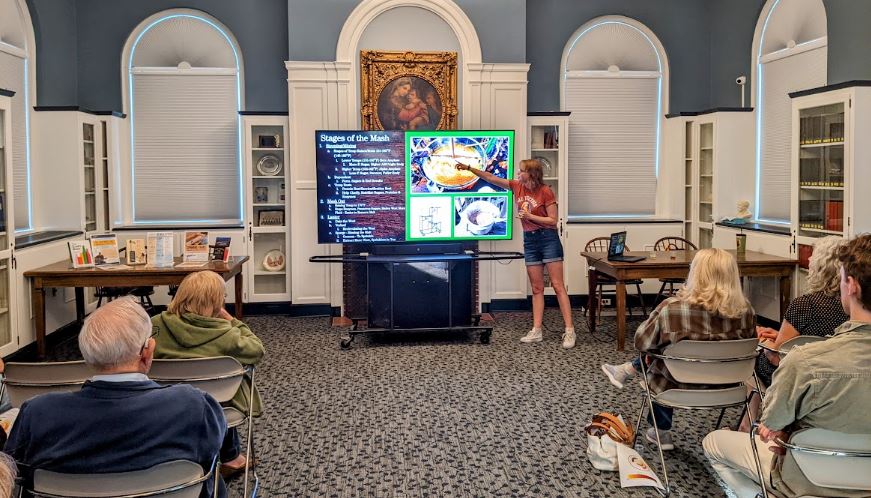
It was fun and enlightening to go back to the basics for this month's Ale Together Now program, and we're looking forward to exploring even more beer topics this fall! Be sure to register for September's Ale Together Now class on the online calendar, and explore some local breweries and beer stores for your favorite fall flavors.
Cheers!