

Alcohol is a psychoactive and toxic chemical compound that affects the central nervous system.... and it's been enjoyed by humans all over the world for centuries. It is rooted in endless cultural traditions through time, from social customs to economic structure, linguistic tradition, and more. Beer is the most popular alcoholic beverage in the world, and is celebrated as a satisfying and versatile drink.
But what if a beer doesn't have alcohol? Will it still have the same flavor and complexity as a regular beer? The answer is.... sort of!
Join us to learn about what non-alcoholic, or NA, beers bring to the table, for drinkers and non-drinkers alike, and how non-alcoholic beer is made.
NA beer is a malted beverage with an alcohol content less than 0.5%. To achieve this, the alcohol is either removed (through boiling), reduced (through dilution or controlled mashing & fermenting), or never produced at all. NA beer has grown in popularity in the United States over the last ten years, and the flavor and variety of this style is improving all the time! Many mega-brewers, from Heineken to Labatt's and Corona, now feature NA options. Some breweries are 100% dedicated to non-alcoholic brewing, like Athletic Brewing Company!
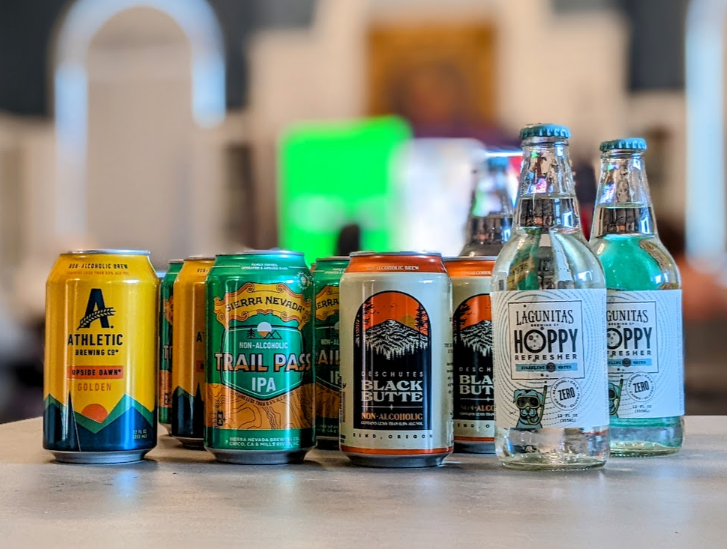
We sampled Upside Dawn, a classic craft golden-style ale from Athletic Brewing Company, to get an idea of what NA beers are like. This beer features earthy and spicy notes, balanced with citrusy aromas.
Before we dive into the process of de-alcoholizing beer, let's first take a look at what makes a beer alcoholic. Alcohol is the by-product of fermentation, during which yeast consumes sugar and produces carbon dioxide and ethanol. Yeast is a single-celled organism in the Kingdom Fungi, that naturally exists in our environments-- on vegetables and fruit skins, grain husks, and in the air. Fermentable sugars are extracted from malted barley, which is 38-40% starch. The perfect environment for fermentation to occur is warm, wet, and sugary-- about 60-75 degrees F for ale yeast (Saccharomyces cereviciae) and 45-55 degrees F for lager yeast (Saccharomyces pastorianus). These temperature and sugar requirements allow yeast to do their thing, producing CO2 and alcohol!
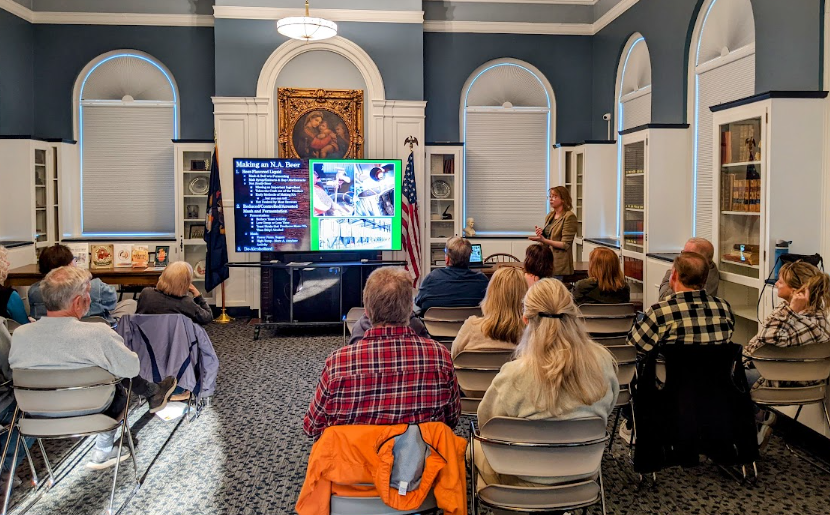
So what exactly is the process of removing alcohol from beer? There are three basic ways to do it.
- "Beer Flavored Liquid", which is not truly a beer, can be made by mashing and boiling wort as usual, but not fermenting it. Malt syrup and hop oils are used to give the beverage a beer-like flavor, but it's missing a key ingredient of traditional beers-- yeast! This is one of the earliest methods of making NA beer, and sometimes it's pretty obvious in the taste.
- Another way to make NA beer is to carefully control the mash and fermentation processes, to keep alcohol production extremely low. In the mashing process, brewers can add less fermentable sugars and use a higher temperature. During fermentation, brewers can use a lower temperature or less time to reduce yeast activity. Or, they can use a yeast strain that produces more carbon dioxide than ethanol.
- Brewers can also de-alcoholize beer through vacuum distilling, reverse osmosis, or using expensive machinery. These are very involved processes that require specific equipment.
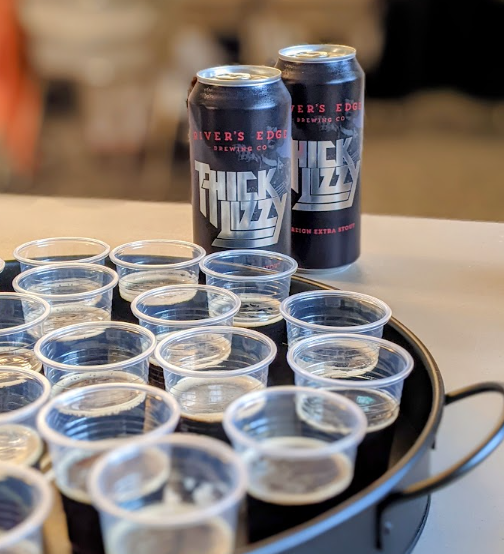
We sampled Trail Pass by Sierra Nevada Brewing Company, and enjoyed the light mouthfeel and notes of citrus and pine in this non-alcoholic IPA. Next, we compared two dark beers-- NA Black Butte by Deschutes Brewery and Thick Lizzy by River's Edge Brewing Company, for a direct comparison between an NA beer and a beer that sits at 6.5% ABV!
Another fantastic NA option-- that can't even pretend to be beer-- is hop water. Hop water is a hop-infused sparkling water that is light, refreshing, and very effervescent. Folks love it because it offers lovely hop flavors with no gluten, alcohol, or calories. Hops that focus on citrus, floral, and pine flavors are used, like Citra, Mosaic, Sorachi Ace, Cascade, Amarillo, Galaxy, and Chinook hops.
Hop water is made with purified water and the addition of acid, like citric acid or lemon juice, to help with flavor and aroma extraction. Next, pellet hops are steeped (for their Alpha and Beta acids) and hop oils are added (to contribute flavor and aroma), and then the beverage is carbonated and cooled. The masterpiece we end up with is a refreshing, alcohol-free drink that's perfect for sunny days or gatherings with friends.
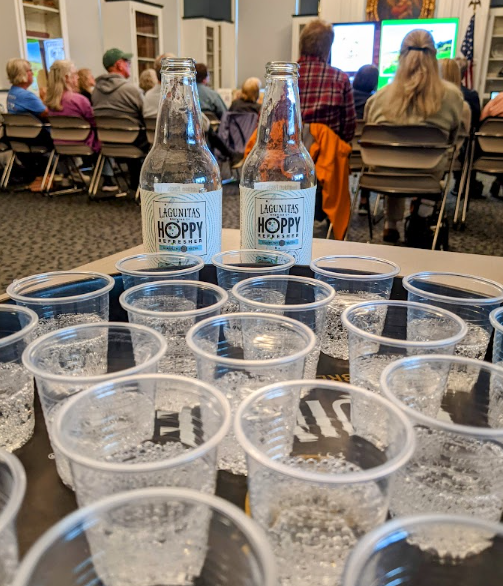
We sampled Hoppy Refresher from Lagunitas Brewing Co. in Petaluma, California! This tasty sparkling water features lots of flavor and is delicately fruity.
Thank you to everyone who joined us for this session of Ale Together Now! We had tons of fun learning with you, and we can't wait for our Saturday Matinee Special Ale Together Now program on Saturday, April 25 @ 12:00 pm! We'll be watching a documentary about Lambic beers, called Bottle Conditioned, and sampling some great Lambic styles. Visit the online calendar to register to join us, and have a wonderful month!
Cheers!